05 · Where Nongjiazheng fits
Our work sits on the same six bottlenecks
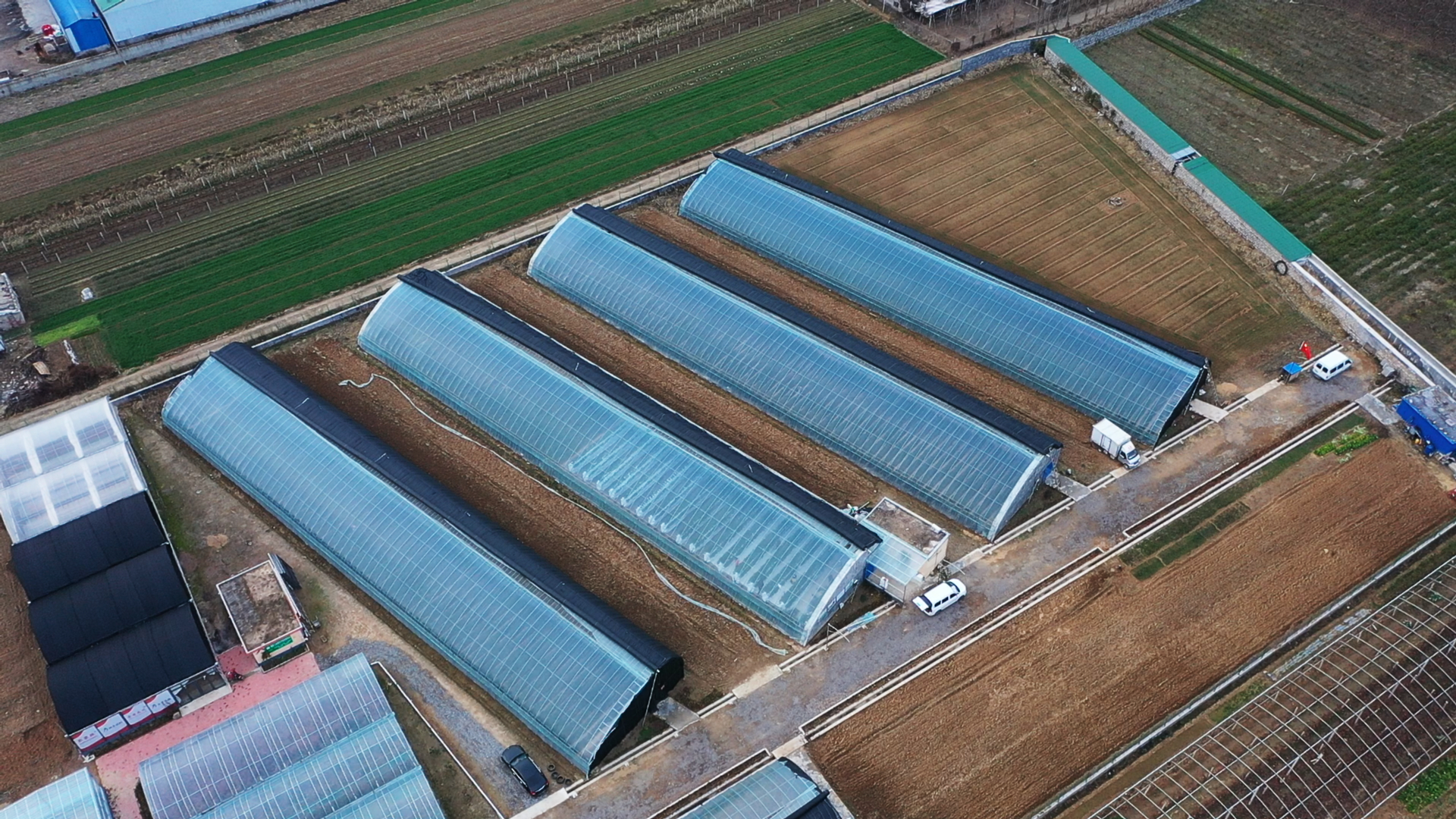
Nongjiazheng was founded in 2014 in Linyi, Shandong, and operates the Linyi Weiyi demonstration farm itself. It created China's first "Agricultural Clinical" technical training brand: diagnose the crop systematically, then act on the cause rather than the symptom. Below, each industry gap is matched with something we actually run and can show you on site.
01 · CLEAN STOCK
From saved, virus-carrying plants to high-output nursery stock
Industry gap: 70%+ estimated virus contamination, under 5% virus-free coverage, and very few specialised nurseries in producing counties.
↓
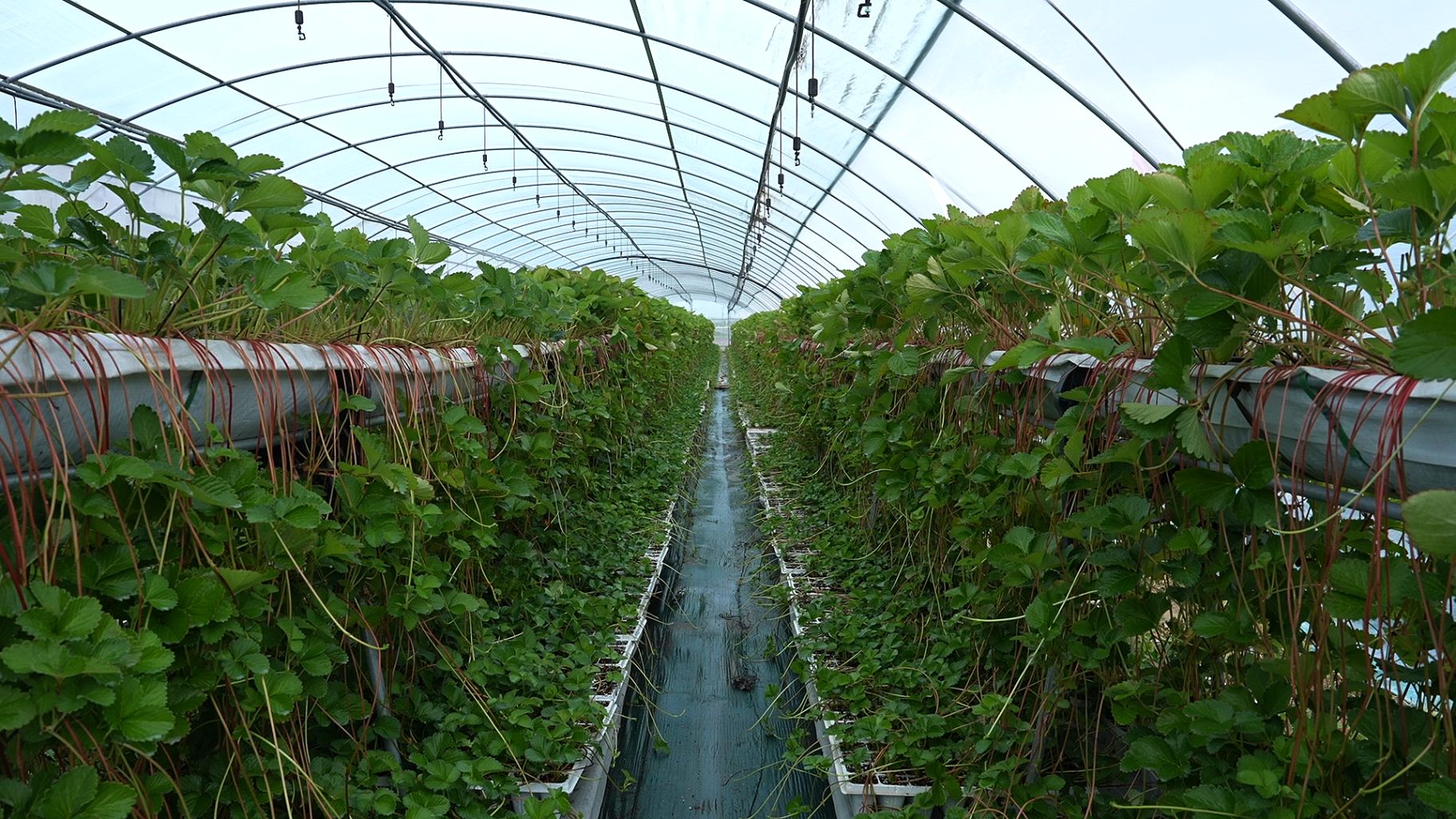
What we run Elevated vertical cutting propagation on clean substrate, raising output from the conventional 30,000–40,000 plants per mu to a published 250,000–300,000 plants per mu — an 8–10× increase — with lower labour per plant. In 2024 the base produced 400,000 virus-free plants and over 1 million production plants. Six propagation methods are set up side by side so trainees can compare them hands-on.
02 · SOIL & REPLANT
Taking the root zone out of the soil cycle
Industry gap: replant disease, soil acidification and heavy pesticide use; soilless systems are known to work but hard to adopt without know-how.
↓
What we run Elevated substrate growing with roughly twice the plant density of a conventional tunnel, no replant cycle, cleaner fruit, and remote one-touch fertigation — four to five tunnels per person. On our own farm, integrated water/fertiliser management and green pest control cut agrochemical use by more than 30%.
03 · STANDARDISATION
Turning 20 years of experience into rules a grower can follow
Industry gap: growers rely on habit rather than diagnosis; an ageing, fragmented grower base makes consistent practice difficult to spread.
↓
What we run With the Shandong Academy of Agricultural Sciences and the Linyi Academy, we compiled Modern Strawberry Health Cultivation Techniques and issued the Nongjiazheng Strawberry Clinical Application Technical Enterprise Standard: the whole crop reduced to 20 characters and 20 technical standards — root/stem/leaf/flower/fruit, water/fertiliser/light/air/temperature, pests/weeds/rodents/seedlings, plus site, people, cultivar and chemistry. A "4+1" service model adds follow-up tracking to classroom, field, online and exchange learning.
04 · REGIONAL FIT
Techniques proven across very different climates
Industry gap: China spans cold northern tunnels, Yangtze winter production and Yunnan off-season systems; a method from one region often fails in another.
↓
What we run The base has 12 clinical training greenhouses in different growing modes, built to simulate conditions from across the country. Our reach is national: 30 provinces served, 200,000+ trainees to date, and — in a 2023 public profile — support to 5,000+ large growers and 300+ farm bases and cooperatives. Daily online clinics and field courses keep the feedback loop running.
05 · VERIFICATION
A working farm, not a slide deck
Industry gap: growers are asked to invest in elevated systems after seeing photographs; few training providers farm commercially themselves.
↓
What we run A 4.1-hectare (62 mu) demonstration farm we operate ourselves, plus both growing models and all six propagation methods on site. Public reporting on partner growers describes harvest about two months earlier and per-mu revenue moving from CNY 40,000–50,000 to CNY 60,000–80,000 in those cases. These are reported individual cases, not a general result or an income guarantee.
06 · INTERNATIONAL TRANSFER
Connecting Chinese scale with international plant standards
Industry gap: overseas growers can see Chinese scale but rarely get the method in their own language, with a plan for their own climate and market.
↓
What we run A Foreign Expert Workstation linking us with international breeding specialists, bilingual programs, and a turnkey track for building a base back home. Our founder is vice-chair of the Shandong Strawberry Association and led the founding of the Linyi Strawberry Industry Alliance, with "five unifications" (stock, inputs, technique, packing, sales) across 45 cooperatives and family farms.